Galesburg
March 20 - May 9, 2026 | Project Space
Chris Wiley
-

Installation View, Galesburg, 2026
-
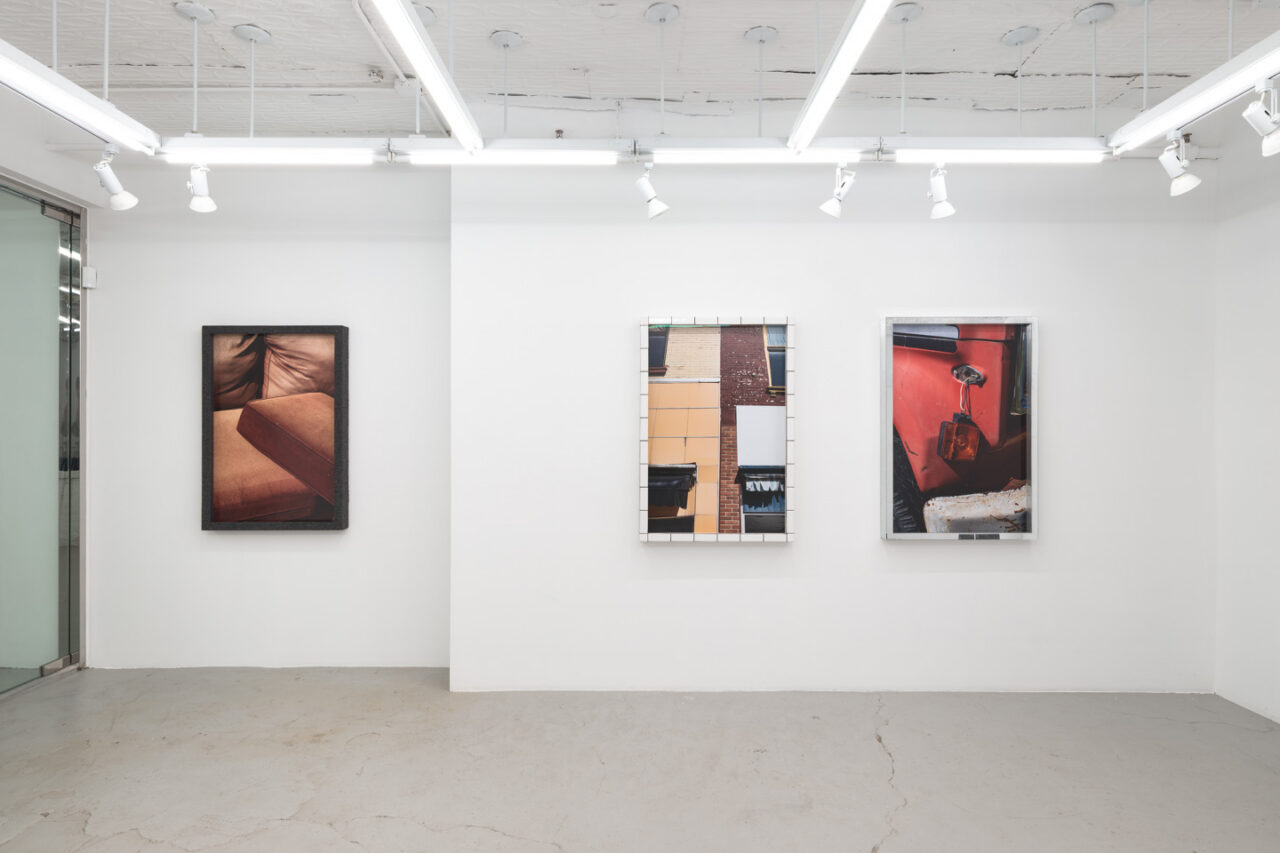
Installation View, Galesburg, 2026
-

Installation View, Galesburg, 2026
-

Installation View, Galesburg, 2026
-

Installation View, Galesburg, 2026
-

Installation View, Galesburg, 2026
-

Installation View, Galesburg, 2026
-
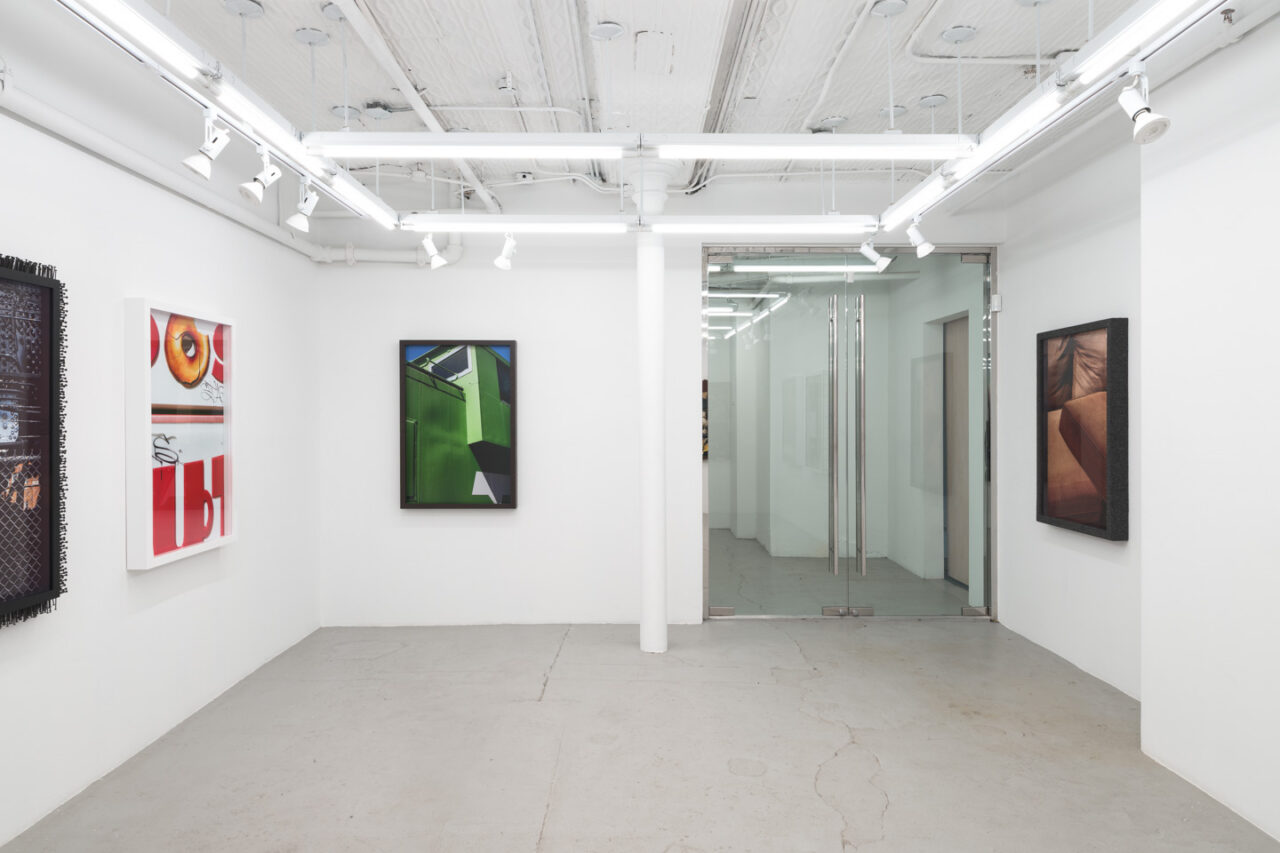
Installation View, Galesburg, 2026
-

Chris Wiley
Untitled (American Picture) 8, 2026
Inkjet print, artist's frame with Trafficmaster carpet
42 1/4 × 29 inches -
Chris Wiley
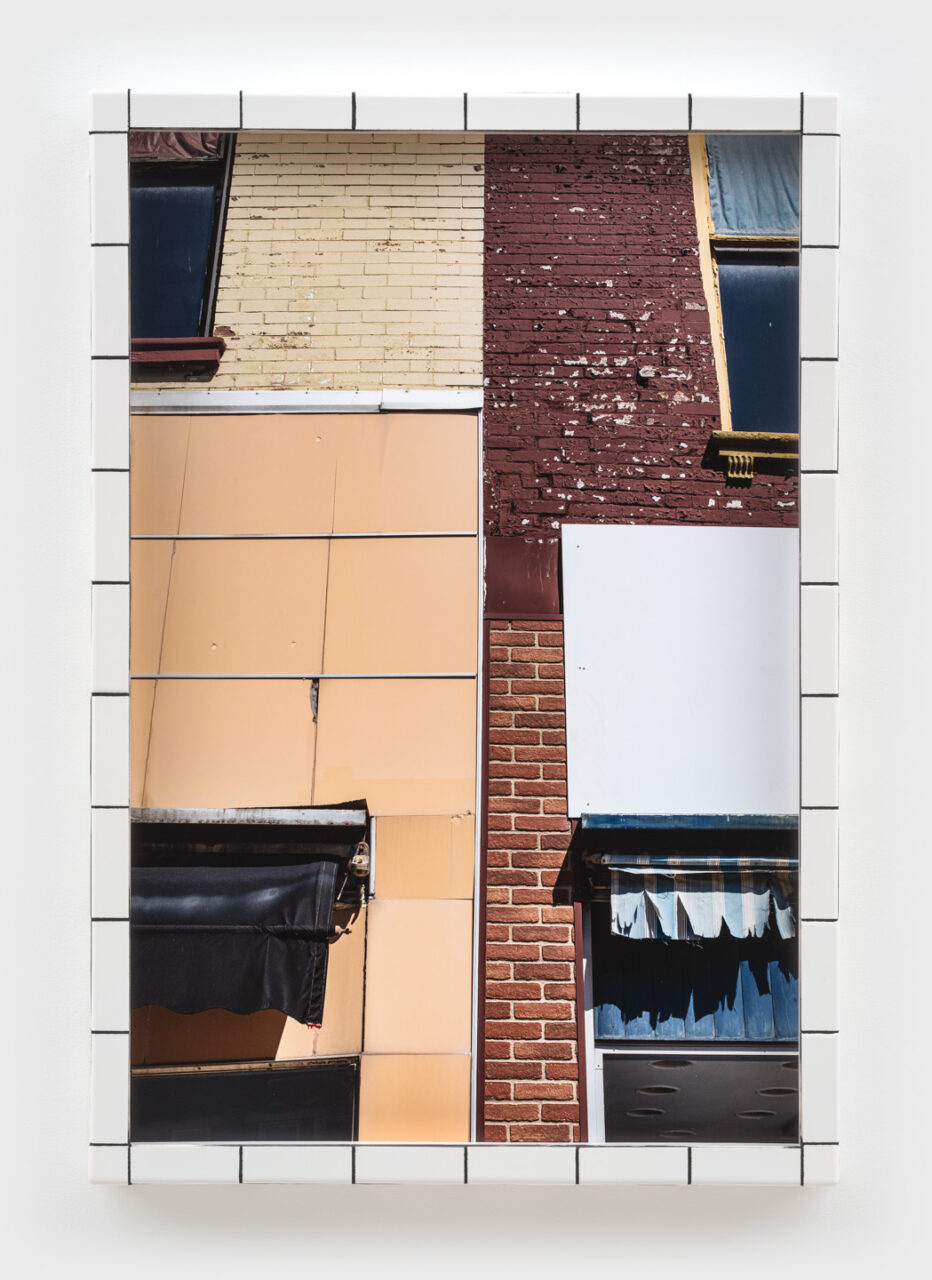
Untitled (American Picture) 2, 2026
Inkjet print, artist's frame with tile
42 1/2 × 29 inches -

Chris Wiley
Untitled (American Picture) 3, 2026
Inkjet print, artist's frame with mirror tile
42 × 28 3/4 inches -

Chris Wiley
Untitled (American Picture) 4, 2026
Inkjet print, artist's frame with sandpaper and nails
42 × 28 3/4 inches -

Chris Wiley
Untitled (American Picture) 5, 2026
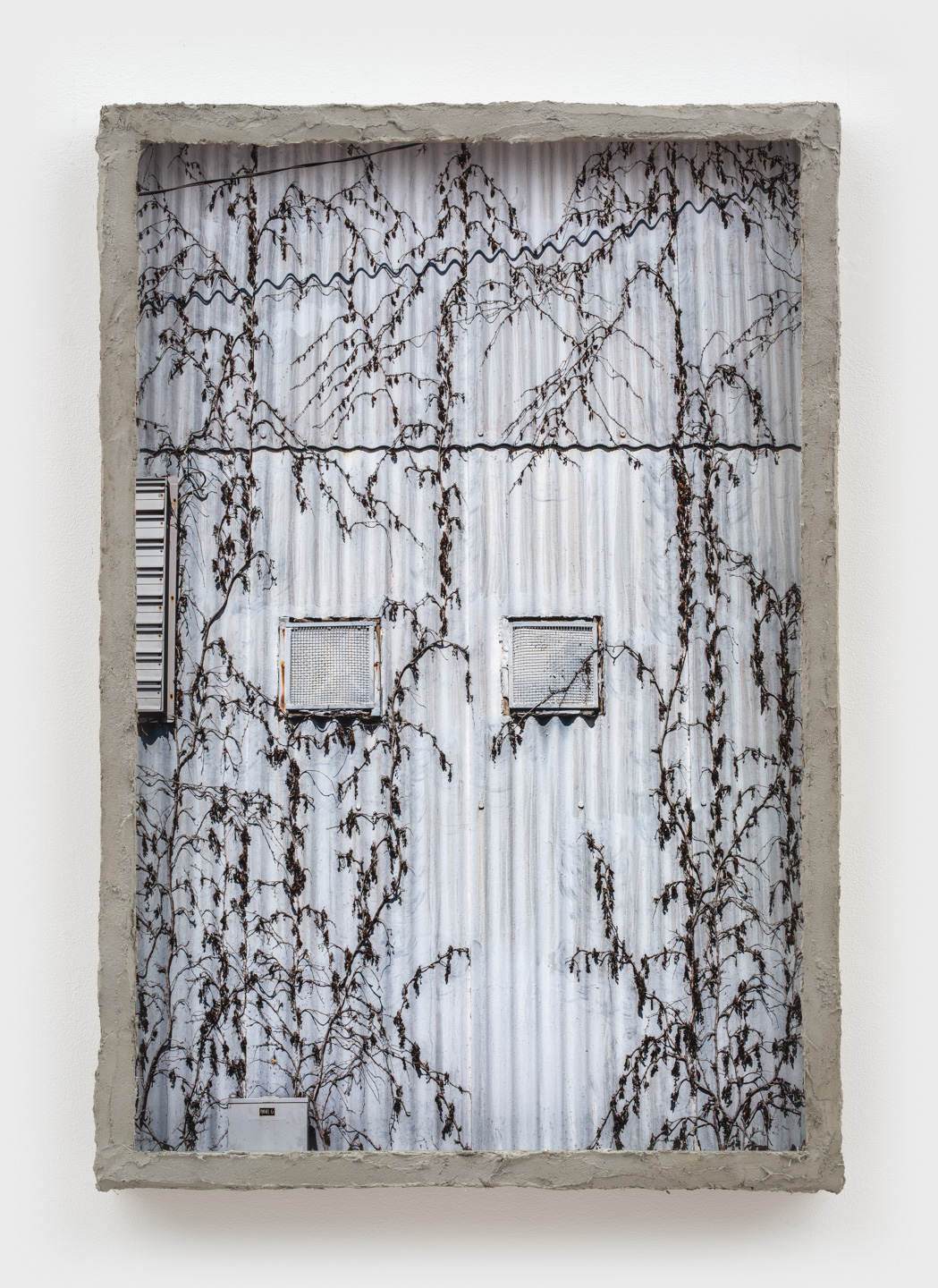
Inkjet print, artist's frame with concrete
42 1/4 × 29 inches -

Chris Wiley
Untitled (American Picture) 6, 2026
Inkjet print, artist's frame with screws
45 1/2 × 32 inches -
Chris Wiley
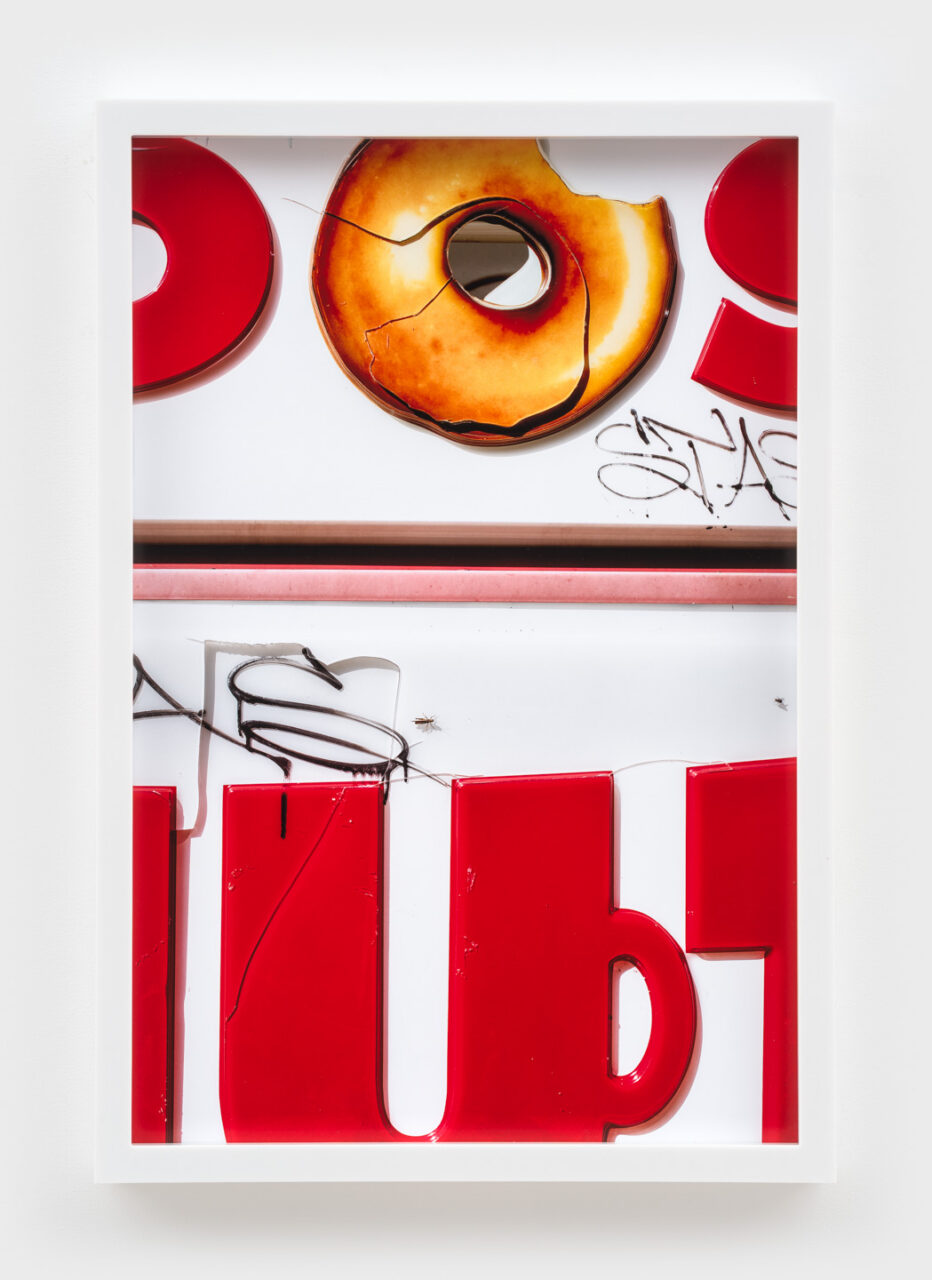
Untitled (American Picture) 9, 2026
Inkjet print, artist's frame with Plexiglas
42 × 29 inches -

Chris Wiley
Untitled (American Picture) 7, 2026
Inkjet print, artist's frame with tarp
42 × 28 3/4 inches




Press Release
Galesburg is a small city in central Illinois. It’s home to Knox College, a liberal arts school that hosted the fifth Lincoln-Douglas debate in 1858, which has made it a magnet for presidential visits. The poet Carl Sandburg was born there, and the artist Dorothea Tanning was, too. Ronald Reagan attended his first year of elementary school in Galesburg, and he later portrayed the major league baseball player Grover Cleveland Alexander, who got his start on the Galesburg Boosters, in the movie The Winning Team. The city was a mainstay on the vaudeville circuit, and one night, during a post-show backroom poker game somewhere in town, the forgotten monologist Art Fisher gave the Marx brothers their indelible nicknames.
Galesburg was a railroad town, a factory town. The largest freight railroad in the United States, BNSF, still operates a rail yard there, but most of the factories have long since closed. Now it is a prison town, a meth town, a fentanyl town, struggling to revive itself after the twin kicks of economic globalization and the 2008 financial crisis brought it to its knees. Barack Obama mentioned it frequently in his speeches as an example of the kind of downtrodden midwestern town that he would rescue from precipitous decline.
My father’s family all lived in Galesburg. His half brother, who worked his whole career in the rail yard, still lives with his wife in a single-level home on the outskirts of town, where the cornfields bump up against their tidy plot. As a kid, I remember flattening pennies under the wheels of the trains that passed behind my grandmother’s house, and how the whole place shook as they rumbled down the tracks. For nearly two decades of her life, my grandmother worked at the Admiral appliance factory, and for ten of those years she would stop back home after work to change clothes, and turn around for a night shift as a waitress at the Friendly Cafe. As a single mother, she had little support. During the Second World War, when the factory shifted production towards the war effort, she helped manufacture droppable fuel tanks that extended the range of combat aircraft. Years later, when she got sick with a mysterious chronic illness that impeded her work, she was fired just weeks before she qualified for her pension. In 2004, the factory, which was then owned by Maytag, shuttered for good and was moved to Reynosa, Mexico. My grandmother died that same year.
When I arrived in Galesburg to make the works for this show, I hadn’t been back since her funeral. Thanks to my uncle, I was promptly swept up in a whirlwind of Americana: an airshow of Stearman biplanes flown in from around the country; a pancake breakfast thrown by the local Lion’s club; a free screening of the Jimmy Stewart picture A Shopworn Angel at the Orpheum, a stunning former vaudeville house, where my father had watched movies growing up. I jumped from a zip line into a swimming hole. I admired my uncle’s extensive collection of Donald Duck memorabilia, plush toys, and figurines. I ate a casserole laden with cheese. My father, now midway into his eighties, still loves coming back to Galesburg. The memories of his old life, which have taken on a nostalgic sheen, are still strong there.
Some things had changed since I had been gone. You could get an excellent bowl of pho, I discovered. A local cafe has gone viral on Tik Tok, bringing people in from out of state. The historic downtown, which had been devastated by the opening of the now-abandoned Carl Sandburg Mall and, later, a Wal-Mart Supercenter, was showing meager signs of life, though they seemed to be arriving at a glacial pace. In what is left of the old Maytag building, a company making processed meat snacks has set up shop, though the jobs it brought numbered in the hundreds, not the thousands that the factory supported at its peak.
The rot that I remembered remained. Every fifth house, it seemed, was either abandoned or in such a state of disrepair that I despaired in the discovery that they were still inhabited. Once quaint shops have been left to crumble, their facades shedding paint like old skin. The police blotter was peppered with news of battery, drug crime, petty theft, and the occasional shooting. The general scarcity of nutritious food—an irony amid so much farmland— and the seemingly related flourishing of the local healthcare industry left me with the sinking feeling that the town had become a factory that made sick people, and then, for a fee, patched them back up. (This now-commonplace transformation is outlined by historian Gabriel Winant in his book The Next Shift: The Fall of Industry and the Rise of Healthcare in Rust Belt America.)
Sifting though old photographs of Galesburg that my father keeps tucked away in our family’s basement, you could get the impression that it was some kind of American idyll pulled straight out of Norman Rockwell: stickball games on brick back streets; portraits of proud soldiers shipping off to serve; shining new automobiles. Of course, this is a kind of pleasant lie. Even Rockwell, who suffered keenly from depression most of his life, was said by his biographer, Deborah Solomon, to have painted his “longing” rather than his reality. My grandmother struggled with alcohol. After getting dinged up in one too many drunk driving accidents, a dentist removed her teeth and gave her dentures, figuring that was easier. My father once chased a man she was seeing out of their house with a gun, after discovering him in their bed with another woman. Other lives were just as tough. But the desire to tell the pleasant lie is coextensive with the dream of a better life, a better future. This dream used to feel within reach in Galesburg. I can’t say it does anymore.
Chris Wiley (b. 1981) is an artist, writer, and curator. He has contributed to numerous exhibition catalogs and magazines including Kaleidoscope, Elle, Cabinet, FOAM, Aperture, ArtForum, and Frieze, where he was a contributing editor. He writes regularly about photography for The New Yorker. As a curator, he previously worked on exhibitions at the New Museum of Contemporary Art, the 8th Gwangju Biennale, and the 55th Venice Biennale, and others. His work has been included in exhibitions at MoMA PS1, Atlanta Contemporary, Marian Goodman Gallery, and Hauser & Wirth, among others. This is his third solo show with the gallery.